The Ankle Problem Nobody Sees Coming: How Two Small Joints Are Running (and Ruining) Your Entire Body
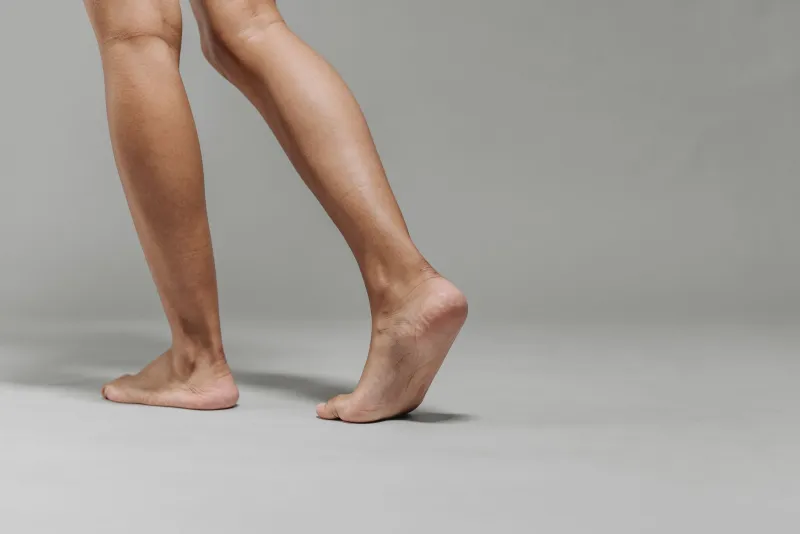
You've tried the hip stretches. You've done the core work. You've even invested in a standing desk. And yet something still feels off — your lower back aches, your knees grind, and your shoulders seem permanently glued to your ears. Here's a question most practitioners never think to ask: when did someone last actually look at your ankles?
It sounds almost too simple. But from an osteopathic perspective, the ankle joint is one of the most underestimated structures in the entire human body. Two relatively small joints — the talocrural and subtalar — are responsible for absorbing ground reaction force, distributing weight across your lower limbs, and setting the stage for every movement pattern you produce. When they stop doing their job properly, the consequences ripple upward through your body in ways that are surprisingly easy to miss and frustratingly hard to fix without addressing the source.
The Kinetic Chain: Why Your Body Is Only as Free as Its Most Restricted Link
Osteopathic medicine is built on a foundational idea: the body functions as an integrated whole. No structure operates in isolation. When one region loses mobility or function, neighboring regions compensate — and those compensations create their own problems over time.
Your kinetic chain is essentially the sequence of joints and muscles that work together to produce movement. Think of it like a relay race. When your ankle passes the baton cleanly, the knee, hip, pelvis, lumbar spine, and thorax all receive clean inputs and respond efficiently. But when ankle mobility is restricted — even subtly — the baton gets fumbled at the very first handoff.
A stiff ankle can't dorsiflex adequately during a squat, a step, or even a simple walk. So your body improvises. Your heel lifts early. Your knee collapses inward. Your hip internally rotates. Your pelvis tilts forward. Your lumbar spine hyperextends to compensate. And somewhere up the chain, your thoracic spine and shoulder girdle quietly absorb the leftover tension. By the time pain shows up, it's usually several joints removed from the actual culprit.
This is exactly why so many people treat their knee pain, their hip tightness, and their back aches for months without getting lasting relief — they're addressing the symptom, not the source.
Modern Shoes Are Doing a Number on Your Foot's Natural Architecture
Here's something that might make you look at your shoe rack differently: the average American spends the majority of their waking hours in footwear that fundamentally alters how their feet interact with the ground.
Elevated heels — even modest ones, like the standard half-inch lift built into most men's dress shoes and athletic trainers — chronically shorten the Achilles tendon and calf complex. Over years, this creates a structural adaptation where the ankle simply cannot achieve full dorsiflexion without strain. The foot's intrinsic muscles, which are meant to actively stabilize the arch and respond to terrain, get lazy inside rigid, supportive shoes. The result is a foot that looks fine but functions poorly.
Cushioned soles reduce proprioceptive feedback — your nervous system's ability to sense where your foot is in space and respond accordingly. Less feedback means less neuromuscular control, which means more instability and more compensatory bracing throughout the lower limb.
None of this is a moral argument against shoes. It's just anatomy. And understanding it helps explain why ankle mobility has become such a widespread issue, particularly in urban and suburban American life where hard, flat surfaces and enclosed footwear are the daily norm.
What Osteopathic Assessment Actually Looks Like
When an osteopathic physician evaluates ankle function, they're not just checking whether you can flex your foot up and down. They're examining the quality of joint motion — whether the talus glides smoothly within the ankle mortise, whether the subtalar joint allows the full range of inversion and eversion, and whether the surrounding soft tissue is pliable or restricted.
One common clinical screen is the weight-bearing lunge test. You place your foot flat on the floor, toes a set distance from a wall, and lunge forward to touch your knee to the wall without your heel lifting. A lack of dorsiflexion range — typically anything under about four inches — is considered clinically meaningful and correlates strongly with compensatory patterns higher up the chain.
Beyond range of motion, osteopathic assessment looks at joint play — the small, passive accessory movements that occur within a joint and that you can't consciously produce yourself. A joint can have acceptable gross range of motion and still lack adequate joint play, which affects how force is transmitted through it. Osteopathic manipulative treatment (OMT) addresses both, using gentle mobilization and manipulation techniques to restore normal arthrokinematics — the mechanics of how joint surfaces move against each other.
Soft tissue assessment of the calf, Achilles, plantar fascia, and tibialis posterior is equally important. These structures don't exist in isolation from the joint, and restriction in any of them will limit what the joint can ultimately achieve.
The Compensation Patterns Worth Knowing About
Restricted ankle dorsiflexion is one of the most well-documented contributors to a handful of common conditions that Americans deal with daily:
Knee pain and patellofemoral syndrome. When the ankle can't absorb shock properly, the knee takes more of the load. Altered tibial mechanics during gait change how the kneecap tracks, which is a setup for anterior knee pain that no amount of quad strengthening will fully resolve.
IT band syndrome and hip tightness. The compensatory internal rotation of the femur that comes with a collapsed arch and restricted ankle puts chronic tension on the lateral hip and iliotibial band — a common complaint among runners who never get told to look at their feet.
Chronic lower back pain. Anterior pelvic tilt, which frequently develops as a downstream compensation for ankle restriction, loads the lumbar facet joints and compresses the lower back's posterior structures. It also lengthens and weakens the glutes, which then can't do their job of stabilizing the pelvis.
Shoulder tension and upper back stiffness. This one surprises people. But when your thoracic spine is forced to compensate for poor pelvic positioning, it loses its natural mobility — and a stiff thoracic spine shifts load onto the cervical spine and shoulder girdle. That chronic tension across your upper back may have started at your ankles.
Where to Start If You Suspect Your Ankles Are the Problem
The first step is honest self-assessment. Try the wall lunge test described above. Notice whether one side is more restricted than the other — asymmetry is often more clinically significant than bilateral tightness. Pay attention to whether your arch collapses when you walk, or whether you tend to supinate (roll outward). These patterns offer clues.
From there, working with an osteopathic physician who performs OMT is genuinely valuable. Unlike a general practitioner visit focused on symptom management, an OMT session looks at the whole structural picture — how your ankles relate to your pelvis, how your pelvis relates to your spine, and where the primary restriction in the chain actually lives.
Self-care practices that support ankle mobility include calf stretching with a bent knee (which targets the soleus rather than just the gastrocnemius), towel scrunches and single-leg balance work to rebuild intrinsic foot strength, and spending some time each day barefoot on varied surfaces to restore proprioceptive sensitivity.
The goal isn't to demonize your sneakers or turn you into a barefoot purist. It's to restore what those joints were designed to do — so that everything above them can finally stop working so hard just to keep you upright.