Your Jaw Is Talking to Your Whole Body — Are You Listening to What It's Saying?
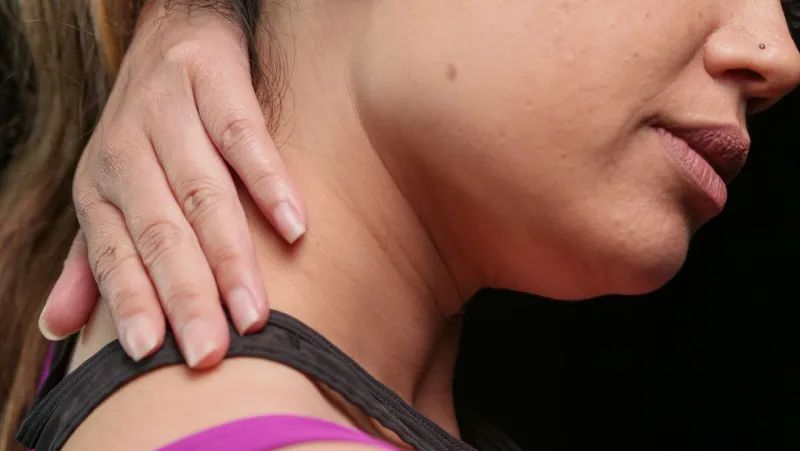
You've been grinding your teeth at night. Your jaw clicks when you eat. Maybe you've got a dull ache that radiates up toward your temple or down into your neck, and no amount of ibuprofen seems to touch it for long. Your dentist fitted you with a night guard — a reasonable first step — but months later, you're still dealing with the same cycle of tension and discomfort.
Here's what most people don't hear in that dental office: your jaw doesn't live in isolation.
The temporomandibular joint, or TMJ, is one of the most biomechanically complex and structurally interconnected joints in the human body. And when osteopathic physicians evaluate someone with jaw dysfunction, they're rarely looking at the jaw alone. They're reading a map — one that traces tension, restriction, and compensation patterns from your skull all the way down to your pelvis.
The TMJ Isn't Just a Jaw Joint
Most people think of jaw pain as a localized mechanical problem — the joint is misaligned, the disc is displaced, or the muscles are overworked from clenching. That's not wrong, exactly. But it's incomplete.
The temporomandibular joint sits at the intersection of multiple structural systems. It's directly influenced by the bones of the skull, particularly the sphenoid and temporal bones, which also play a role in craniosacral rhythm — the subtle, rhythmic motion that osteopaths are trained to assess throughout the body. The muscles that control jaw movement, including the masseter, pterygoids, and temporalis, are deeply connected via fascia to the neck, shoulders, and upper back.
Fascia — that continuous web of connective tissue that wraps around every muscle, organ, and bone in your body — doesn't respect anatomical boundaries. A restriction in the fascia of the neck can pull on the jaw. Chronic tension in the suboccipital muscles at the base of the skull can alter how the TMJ moves. Even the way you hold your ribcage when you breathe can influence the tension pattern that ultimately shows up as jaw pain.
When an osteopathic physician sees a patient with TMJ dysfunction, the evaluation doesn't start and end at the face. It starts with posture. It includes the cervical spine, the thoracic region, the diaphragm, and sometimes even the hips.
What a Dentist Sees vs. What an Osteopath Sees
To be clear — dentists do important work in this space. They can identify structural problems with the joint itself, assess bite alignment, and provide appliances that reduce mechanical strain during sleep. If there's significant dental pathology involved, that expertise is essential.
But the dental model is largely local. It focuses on the joint, the teeth, and the surrounding oral structures. That's appropriate for what dentistry is designed to do.
Osteopathic evaluation, on the other hand, operates from a foundational principle: the body is a unit. Structure and function are interdependent. When something hurts, the site of pain is rarely the whole story.
An osteopath might notice, for example, that a patient with TMJ pain also has a forward head posture. This is incredibly common — and it's not coincidental. When your head shifts forward of your center of gravity, the muscles at the base of your skull and the front of your neck have to work overtime to keep your head from dropping. That chronic muscular effort creates tension that travels upward into the jaw and downward into the shoulders. The jaw starts compensating for what the neck and skull can't comfortably accommodate.
Or consider the connection between the jaw and the hyoid bone — that small, horseshoe-shaped bone in your throat that anchors several layers of muscles involved in swallowing, speaking, and breathing. The hyoid sits in a web of fascial and muscular connections that link the jaw above to the sternum and ribcage below. Restrictions here can subtly alter jaw mechanics in ways that no dental X-ray will ever capture.
The Migraine and Breathing Connection
If you've been dealing with TMJ issues and also experience frequent headaches or migraines, you're not imagining the link. The trigeminal nerve — the largest cranial nerve, responsible for sensation across the face and jaw — is heavily involved in both TMJ function and migraine physiology. Chronic tension and compression around the TMJ can sensitize this nerve, lowering the threshold for headache onset.
Breathing is another underappreciated piece of the puzzle. When the jaw is chronically tight, it often reflects a broader pattern of upper chest breathing and restricted diaphragm movement. Mouth breathing, which frequently accompanies jaw dysfunction (especially in people with TMJ-related airway issues), further disrupts the balance between the sympathetic and parasympathetic nervous systems — keeping your body in a low-grade state of stress that makes muscular tension worse.
Osteopaths look at all of this together. The jaw, the breath, the nervous system response, the postural patterns — they're chapters in the same story.
What Osteopathic Treatment Actually Looks Like
Osteopathic manipulative treatment (OMT) for TMJ-related issues isn't about cracking your jaw or applying force to your face. It tends to be gentle, precise, and guided by what the practitioner feels under their hands.
Treatment might involve soft tissue work around the masseter and pterygoid muscles, gentle mobilization of the cervical spine to release tension that's feeding into the jaw, or craniosacral techniques aimed at improving the mobility of the temporal and sphenoid bones. Myofascial release along the neck and upper thoracic region is often part of the picture, as is attention to rib cage mobility and diaphragmatic function.
The goal isn't just to quiet the jaw down temporarily. It's to identify why the jaw is under stress in the first place — and address those upstream drivers so the relief actually lasts.
When to Think Beyond the Dental Chair
If you've had your bite adjusted, you've worn a night guard faithfully, and you're still waking up with a sore jaw and tension headaches, it may be time to get a broader perspective. That doesn't mean abandoning your dentist — it means adding another layer to your care.
An osteopathic physician who has experience with musculoskeletal and cranial work can offer an evaluation that maps the full structural picture. In many cases, patients find that what they thought was a jaw problem was actually a posture problem, a breathing problem, or a fascial tension problem that happened to express itself at the jaw.
Your body is always communicating. Jaw pain is just one of the ways it asks for a bigger conversation. The question is whether you're working with practitioners who are equipped to listen to the whole message — not just the part that shows up on a dental scan.
The jaw is connected to everything. And sometimes, healing it means starting somewhere else entirely.