Why Your Shoulder Stopped Moving: The Nervous System Story Behind Frozen Shoulder That Nobody Tells You
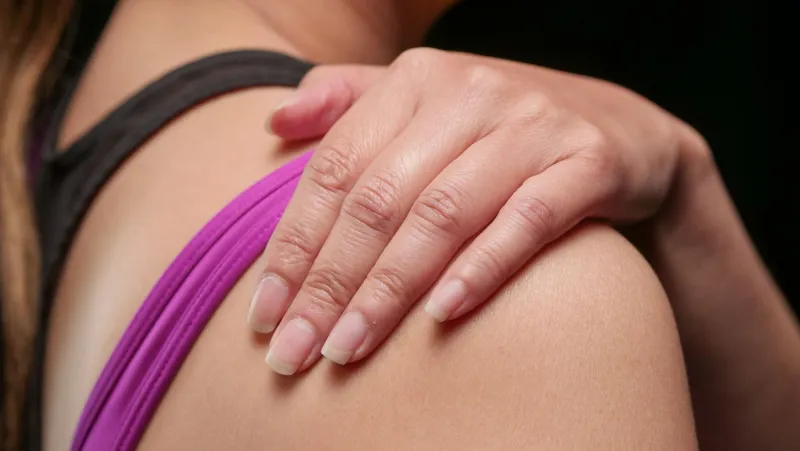
You wake up one morning and reaching for your coffee mug feels like trying to lift a boulder. Or maybe it crept in slowly — a little stiffness after a long work stretch, some soreness you chalked up to sleeping wrong, and then one day you realize you can't lift your arm past shoulder height without wincing. Welcome to the world of adhesive capsulitis, more commonly known as frozen shoulder.
Most people hear "frozen shoulder" and assume it's a straightforward orthopedic issue — some inflammation, some scar tissue, maybe a cortisone shot and a few months of physical therapy. But for millions of Americans dealing with this condition, that approach delivers frustratingly partial results. The shoulder thaws a little, then stalls. Or the pain shifts. Or it comes back.
Here's the part of the story that often gets left out: your shoulder didn't freeze in isolation. Your nervous system had a lot to do with it.
What Adhesive Capsulitis Actually Is (And Isn't)
At its core, frozen shoulder involves the capsule surrounding the glenohumeral joint — the ball-and-socket joint that gives your arm its remarkable range of motion — becoming inflamed, thickened, and progressively tighter. Scar tissue forms. Movement shrinks. Pain intensifies, particularly at night or during reaching and rotation.
The classic progression moves through three phases: freezing (painful and increasingly restricted), frozen (less painful but severely stiff), and thawing (gradual return of motion). The whole cycle can last anywhere from one to three years, sometimes longer.
What the textbooks don't always emphasize is why that capsule starts tightening in the first place — and why certain people are far more susceptible than others. Diabetics and those with thyroid dysfunction are at higher risk. So are people who've recently experienced significant emotional stress, prolonged immobility, or a period of disrupted sleep. That pattern is not a coincidence.
Your Nervous System Is Running the Show
The shoulder joint is one of the most neurologically complex regions in your upper body. It's served by a dense network of nerves that originate in the cervical spine — particularly the lower cervical segments — and weave through the brachial plexus before branching out into the arm. When any part of that neural pathway is under tension or compression, the downstream effects can be profound.
Chronic stress is a major and underappreciated contributor. When your body stays locked in a sympathetic nervous system state — the classic fight-or-flight mode that so many Americans live in daily — muscle tone increases, blood flow to peripheral tissues decreases, and the fascial layers surrounding your joints become less pliable. The shoulder capsule doesn't exist in a vacuum. It's wrapped in fascia that connects upward through the neck, across the chest wall, and down through the thorax. When that tissue tightens systemically due to sustained stress responses, the shoulder is one of the first places to feel the squeeze.
Breathing patterns play a surprisingly central role here. People under chronic stress tend to breathe high in the chest, using accessory muscles like the scalenes and upper trapezius rather than the diaphragm. Over time, this creates persistent tension through the upper thorax and lower cervical region — exactly the territory that feeds into shoulder mobility. Restricted rib movement in the upper thoracic spine further reduces the mechanical freedom the shoulder girdle needs to function properly.
The Upper Cervical Connection
Osteopathic physicians have long noted a consistent finding in many frozen shoulder cases: restrictions in the upper cervical spine, particularly at the C3-C5 levels, often accompany or even precede significant shoulder dysfunction. These aren't always dramatic — you might not feel neck pain at all — but subtle joint restrictions at those segments can alter nerve conduction, increase protective muscle guarding around the shoulder, and disrupt the normal proprioceptive signals your brain uses to coordinate arm movement.
When the brain receives confused or incomplete information about where the arm is in space, it defaults to restriction as a protective strategy. Essentially, it locks the joint down to prevent what it perceives as a risk of further injury. This is neurologically intelligent in the short term. But when that protective lockdown persists for months or years, it becomes the problem itself.
This is also why pure mechanical stretching so often falls short. You can aggressively stretch a joint whose capsule is restricted, but if the underlying nervous system driver — the cervical restriction, the sympathetic overdrive, the breathing dysfunction — remains unaddressed, the tissue will keep pulling back toward restriction. You're fighting the nervous system's instructions without changing the instructions.
Why Standard Stretching Misses the Point
There's nothing inherently wrong with stretching. The problem is applying a purely mechanical solution to what is often a neurologically mediated problem. Aggressive passive stretching of a frozen shoulder, especially in the early painful phase, can actually increase the inflammatory response and heighten the nervous system's protective tension. Many patients report that their shoulder got worse after a round of aggressive physical therapy that focused primarily on forcing range of motion.
The tissue needs a reason to let go — and that reason has to come from the nervous system. Until the brain's threat assessment around that shoulder changes, the capsule will remain guarded.
How Osteopathic Treatment Addresses the Full Picture
Osteopathic manipulative treatment approaches frozen shoulder from several angles simultaneously, which is what makes it meaningfully different from standard orthopedic care.
First, cervical and thoracic spine restrictions get addressed directly. Restoring normal joint mobility in the upper and mid-back changes the neural environment of the shoulder. It reduces the protective tension that's been feeding into the joint and gives the brain updated, accurate information about the region.
Second, fascial restrictions throughout the shoulder girdle, chest wall, and even the diaphragm are treated with myofascial release techniques. Because fascia is continuous — it doesn't stop at the shoulder — releasing tension in the thorax and upper ribs creates indirect but meaningful changes in shoulder capsule mobility. Patients are often surprised that working on their ribs or sternum produces a noticeable shift in how far their arm can move.
Third, and perhaps most importantly, osteopathic care actively works to shift the nervous system out of sympathetic overdrive. Techniques that engage the parasympathetic response — including specific cranial approaches and gentle rhythmic soft tissue work — help the body move out of its protective, guarded state. When the nervous system feels safer, the shoulder often follows.
Breathing retraining is frequently incorporated as well. Teaching patients to breathe diaphragmatically rather than through their accessory muscles reduces the chronic upper thoracic tension that contributes to the problem in the first place.
The Long Game
Recovering from frozen shoulder — especially when the nervous system dimension is involved — isn't a quick fix. But it also doesn't have to be a three-year ordeal of waiting for the joint to "thaw" on its own. When the root contributors are identified and addressed, many people begin regaining meaningful motion well ahead of what the standard timeline suggests.
If you've been dealing with shoulder stiffness that isn't responding to conventional treatment, it may be worth asking a different question — not just "what's wrong with my shoulder?" but "what is my nervous system trying to protect me from?" That shift in perspective might be exactly what unlocks the next phase of your recovery.