Stop Blaming Your Hamstrings: The Real Reason You're Still Stiff No Matter How Much You Stretch
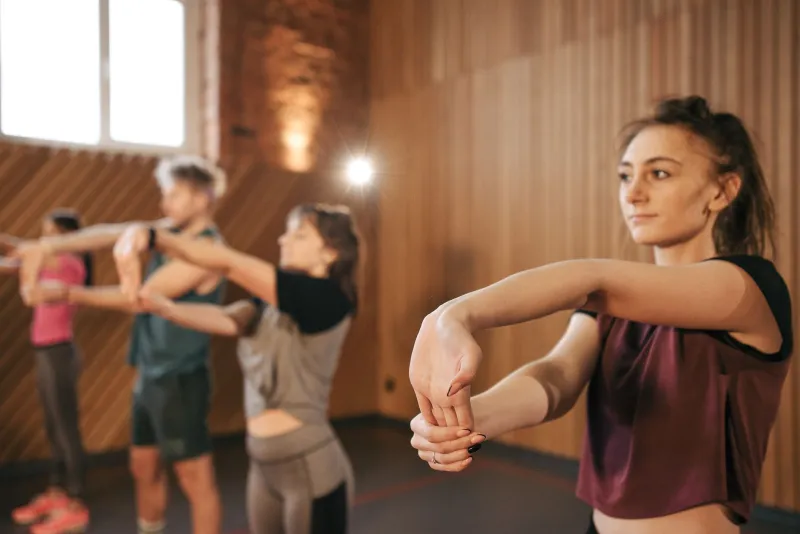
Let's be honest about something. You've probably been told — by a trainer, a physical therapist, a well-meaning YouTube video — that you need to stretch more. So you stretch. Maybe you do it every morning. Maybe you hold those hamstring stretches for a full minute like the internet says. And yet, you still feel like you're moving around in a suit of concrete.
Here's the uncomfortable truth: for a lot of people, more stretching isn't the answer. It might not even be close to the answer.
This isn't an anti-stretching manifesto. Stretching has its place. But the cultural obsession with flexibility — with touching your toes as a proxy for being healthy — has led millions of people to chase a metric that doesn't actually tell them much about how their body moves, feels, or functions.
Osteopathic medicine has a different framework for thinking about this. And once you understand it, the way you approach your body will never quite be the same.
Flexibility and Mobility Are Not the Same Thing
This is the first distinction worth making, and it's a big one.
Flexibility is a passive property. It describes how far a muscle or tissue can be lengthened when an external force is applied — like when you push into a stretch. Mobility, on the other hand, is active. It's the usable range of motion your nervous system actually allows you to access under load, during movement, in real life.
You can be flexible and completely immobile. Plenty of people can fold forward and touch the floor in a static stretch but can't perform a proper hip hinge under a light load without their lower back rounding and their movement pattern falling apart. That's a mobility problem, not a flexibility problem — and no amount of passive stretching is going to fix it.
This is where the mainstream fitness conversation goes off the rails. We conflate the two, assume that more length equals better function, and then wonder why all that stretching isn't translating to less pain or better movement.
What's Actually Holding You Back
When an osteopathic physician evaluates a patient who presents with chronic stiffness, they're not just looking at muscle length. They're asking a more layered set of questions.
Joint arthrokinematics — the specific rolling, gliding, and spinning motions that happen inside a joint — are often the real culprit behind perceived stiffness. If the joint surfaces aren't moving the way they're supposed to, the muscles surrounding that joint will guard it. They tighten up as a protective response. You can stretch those muscles until the cows come home, but if the underlying joint mechanics are off, the tension will keep coming back. It's not stubbornness — it's your nervous system doing its job.
Fascial restrictions add another layer. Fascia — the connective tissue web that surrounds and interpenetrates every muscle, organ, and structure in your body — doesn't respond well to the kind of brief, aggressive pulling that most people call stretching. It's viscoelastic, meaning it changes slowly under sustained, gentle load. Quick, forceful stretches can actually trigger a protective response in fascial tissue, causing it to stiffen rather than release.
Neural tension is a factor that gets almost zero attention in mainstream wellness conversations. Your peripheral nerves need to be able to slide and glide through surrounding tissues as you move. When they can't — due to scar tissue, postural compression, or fascial restriction — you'll feel tightness and resistance in movements that have nothing to do with muscle length. Classic neural tension patterns can mimic tight hamstrings so closely that most people never realize the difference.
The Osteopathic Perspective on Movement Quality
Osteopathic philosophy holds that structure and function are inseparable. The way your body is organized structurally — how your joints are aligned, how your connective tissues are oriented, how your nervous system has mapped your movement patterns — directly determines how you function.
This means that lasting mobility isn't something you achieve by forcing tissues to be longer. It's something that emerges when structure is optimized and the nervous system feels safe enough to allow full range of motion.
That last part is worth sitting with. Your nervous system is the gatekeeper of your mobility. It restricts range of motion when it perceives a threat — instability, poor load distribution, unfamiliar positions, or compromised joint mechanics. Until you address those underlying inputs, you're essentially trying to negotiate with a security system that has good reasons for keeping the door locked.
What Actually Produces Lasting Results
So if endless stretching isn't the answer, what is? Here's a more effective framework, informed by osteopathic principles and supported by contemporary movement science.
Address joint mobility directly. Targeted joint mobilization — moving a joint through its full arthrokinematic range, not just its gross range — is more effective than stretching the muscles around it. Simple techniques like controlled articular rotations (CARs), where you move a joint slowly through its complete available range under muscular control, train both the joint surfaces and the nervous system simultaneously.
Load the new range. This is the step most people skip. When you gain a new range of motion, you need to strengthen and stabilize within it, or your nervous system will simply take it back. End-range strengthening — building tension at the outer limits of a movement — is what converts passive flexibility into usable mobility.
Work with fascia on its own terms. Sustained, gentle pressure applied over 90 seconds or more is what actually changes fascial tissue. Foam rolling done slowly and deliberately, myofascial release techniques, and even extended holds in yoga-style postures can be effective when approached with patience rather than aggression.
Improve movement patterns, not just tissue length. Sometimes stiffness is a motor control problem. The brain has a learned pattern for how a movement should go, and it restricts range to stay within that pattern. Drilling better movement mechanics — through exercises that challenge coordination and proprioception — can unlock range of motion that no amount of stretching was ever going to reach.
A Note for the Desk-Bound Among Us
If you spend eight or more hours a day sitting — and statistically, there's a good chance you do — your stiffness has a postural dimension that compounds everything above. Prolonged hip flexion shortens the hip flexors, yes, but it also creates joint compression patterns, alters pelvic position, and retrains your nervous system to treat a slouched, compressed posture as its default.
For this group especially, the stretching-only approach is woefully incomplete. What's needed is a combination of joint mobility work, postural retraining, and movement variability — regularly changing positions, incorporating brief movement breaks, and gradually rebuilding the capacity to sustain upright, dynamic posture throughout the day.
The Bottom Line
Stiffness is information. It's your body communicating something about joint mechanics, tissue quality, neural input, or movement patterns — usually some combination of all four. Treating it as a simple flexibility deficit and throwing more stretching at it is like responding to a check engine light by covering it with tape.
You deserve a more complete answer than that. And the good news is, a more complete answer exists — it just requires thinking about your body as an integrated system rather than a collection of tight muscles waiting to be pulled longer.
That's exactly the kind of thinking osteopathic medicine was built on.